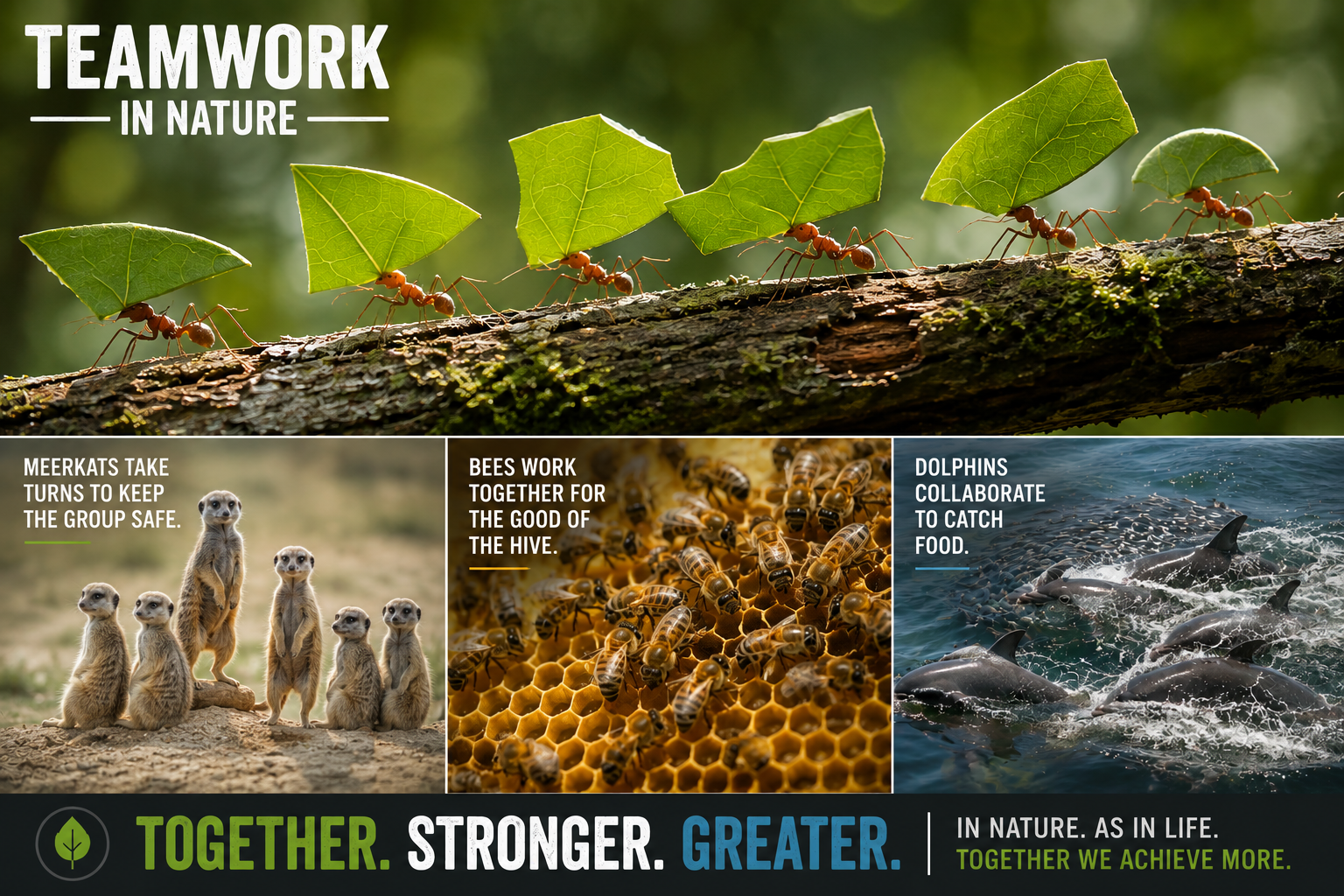
What does teamwork look like

Teamwork is often described with sports metaphors, but in practice, it’s less about a highlight reel and more about the invisible "glue" between people. It is the transition from "What do I need to do?" to "What do we need to achieve?"

Here is a breakdown of what effective teamwork looks like across three key dimensions.

1. The Behavioural Indicators

If you were a fly on the wall in a high-performing team, you would see:

  • Active Listening: People don’t just wait for their turn to speak; they ask clarifying questions to ensure they understand their teammate’s perspective.
  • The "Pass": Just like in basketball, someone with a good idea passes it to the person with the best "shot" (the right skills) to execute it, regardless of hierarchy.
  • Constructive Friction: Teamwork doesn’t mean constant agreement. It looks like healthy debate where the focus is on solving the problem, not winning the argument.
  • Shared Wins and Losses: No one says, "I did my part, but they failed." Success is a collective celebration, and failure is a collective post-mortem.

2. The Functional Components

For teamwork to actually produce results, it requires a specific structural setup:

Element What it looks like
Role Clarity Everyone knows their specific "lane" so they don’t trip over each other.
Trust Team members feel safe admitting they made a mistake or don’t know an answer.
Common Goal A clear "North Star" that guides every decision and priority.
Reliability Teammates do what they say they will do, when they say they will do it.

3. The "Invisible" Signs

Sometimes the best teamwork is what you don’t see:

The Ego Check: It’s the moment a senior leader steps back to let a junior employee lead a meeting because that employee has the most expertise on the topic.

  • Anticipation: Teammates begin to anticipate each other’s needs. If "Person A" is overwhelmed, "Person B" steps in to take a task without being asked.
  • Psychological Safety: The environment feels "low-stakes" for sharing creative (and sometimes bad) ideas, which is where the best innovations eventually come from.


You hired good people so let them get on with it!

As a manager or business owner, one of the biggest responsibilities you have is to assemble a team of skilled and capable employees who can work together to achieve the goals of the organization. But sometimes, as the boss, it can be tempting to micromanage and control every aspect of your team’s work. However, this can actually be counterproductive and limit the potential of your employees.

When you hire good people, it’s important to trust that they have the skills and expertise needed to do their job. By constantly checking in on them, second-guessing their decisions, and imposing unnecessary rules and restrictions, you risk sabotaging their creativity and motivation. This can lead to a decrease in productivity, disengagement, and eventually, high turnover.

So why not let your employees get on with their work and give them the space and resources they need to excel? Here are some reasons why it’s important to trust your team and let them take ownership of their work:

1. Fosters creativity and innovation: When you give your employees a sense of autonomy and ownership over their work, they are more likely to explore new ideas, take risks, and think outside the box. This can lead to innovative solutions and fresh perspectives that can help your business grow and thrive.

2. Builds trust and loyalty: By trusting your employees to do their job, you demonstrate your faith in their abilities and create a sense of mutual respect. This can build a culture of trust and loyalty that can motivate your team to go above and beyond for your company.

3. Increases job satisfaction: When employees feel like they have control over their work and are trusted to make important decisions, they are more likely to feel satisfied in their job. This can lead to higher engagement, better morale, and reduced turnover.

4. Improves productivity: Micromanaging can be a huge time-suck, taking up valuable hours and resources that could be better spent on more important tasks. By letting your employees take ownership of their work, you can free up your time to focus on bigger picture tasks and help your team become more efficient and productive.

In conclusion, hiring good people is only half the battle – you also need to give them the space and trust they need to do their job. By fostering a culture of autonomy, innovation, and mutual respect, you can build a stronger, more engaged team that is motivated to take your business to the next level. So next time you’re tempted to micromanage, remember: you hired good people, so let them get on with it! And you’re free to support the business growth 😉

Here to help you.