
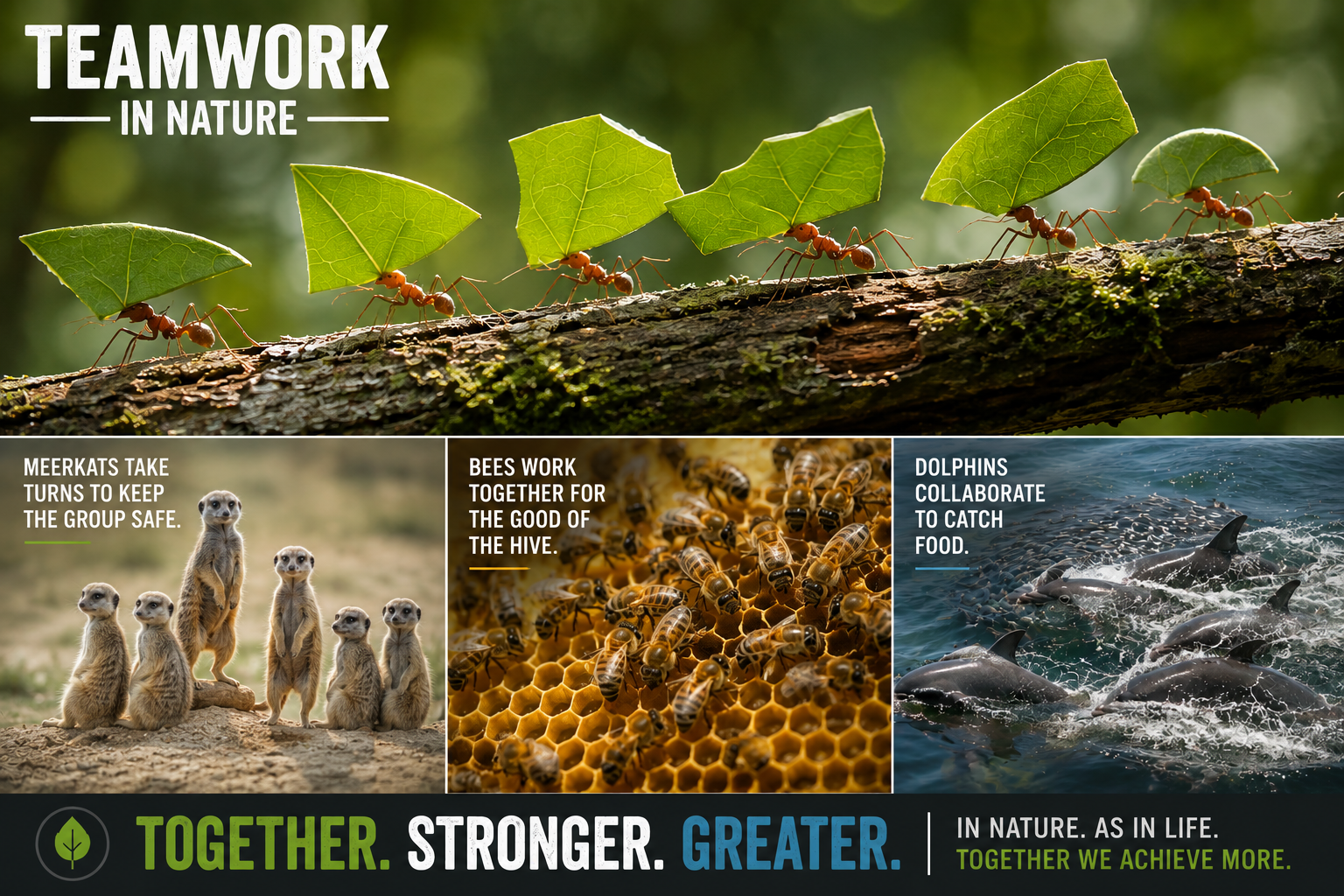
Teamwork is often described with sports metaphors, but in practice, it’s less about a highlight reel and more about the invisible "glue" between people. It is the transition from "What do I need to do?" to "What do we need to achieve?"
Here is a breakdown of what effective teamwork looks like across three key dimensions.
1. The Behavioural Indicators
If you were a fly on the wall in a high-performing team, you would see:
- Active Listening: People don’t just wait for their turn to speak; they ask clarifying questions to ensure they understand their teammate’s perspective.
- The "Pass": Just like in basketball, someone with a good idea passes it to the person with the best "shot" (the right skills) to execute it, regardless of hierarchy.
- Constructive Friction: Teamwork doesn’t mean constant agreement. It looks like healthy debate where the focus is on solving the problem, not winning the argument.
- Shared Wins and Losses: No one says, "I did my part, but they failed." Success is a collective celebration, and failure is a collective post-mortem.
2. The Functional Components
For teamwork to actually produce results, it requires a specific structural setup:
| Element | What it looks like |
|---|---|
| Role Clarity | Everyone knows their specific "lane" so they don’t trip over each other. |
| Trust | Team members feel safe admitting they made a mistake or don’t know an answer. |
| Common Goal | A clear "North Star" that guides every decision and priority. |
| Reliability | Teammates do what they say they will do, when they say they will do it. |
3. The "Invisible" Signs
Sometimes the best teamwork is what you don’t see:
The Ego Check: It’s the moment a senior leader steps back to let a junior employee lead a meeting because that employee has the most expertise on the topic.
- Anticipation: Teammates begin to anticipate each other’s needs. If "Person A" is overwhelmed, "Person B" steps in to take a task without being asked.
- Psychological Safety: The environment feels "low-stakes" for sharing creative (and sometimes bad) ideas, which is where the best innovations eventually come from.


